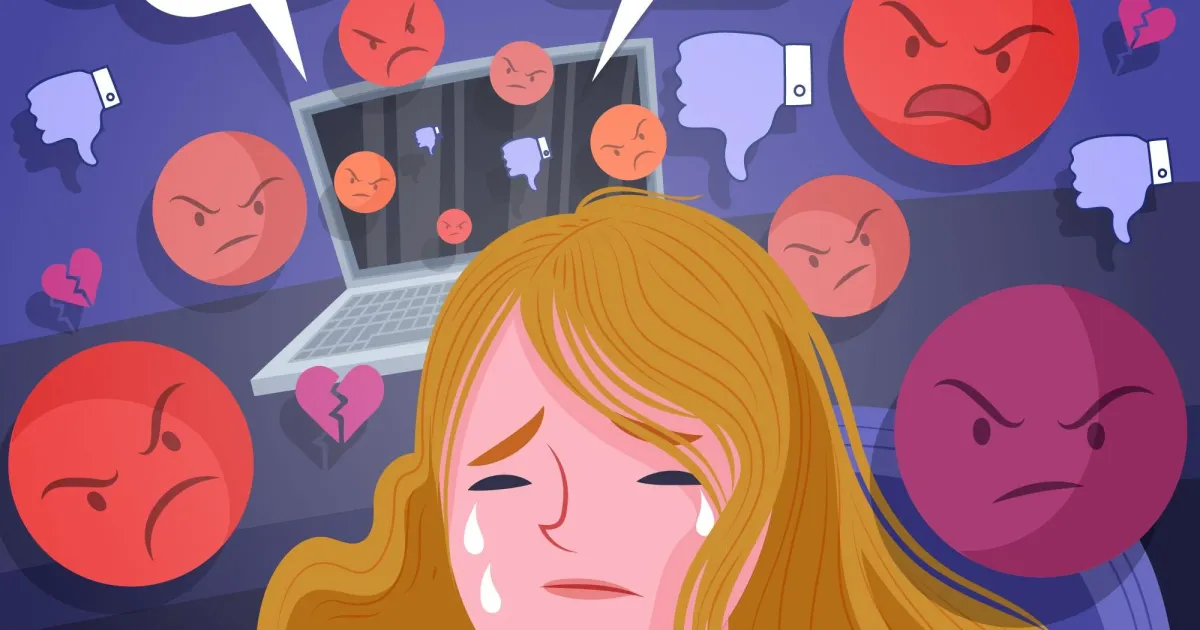
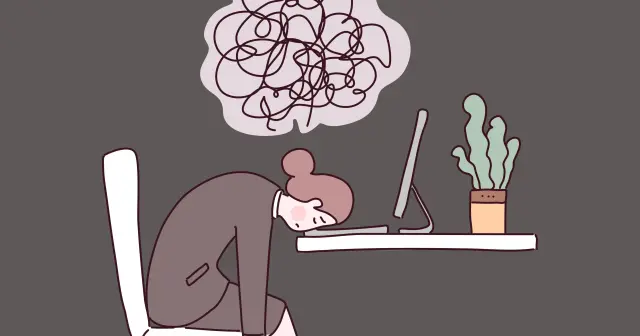
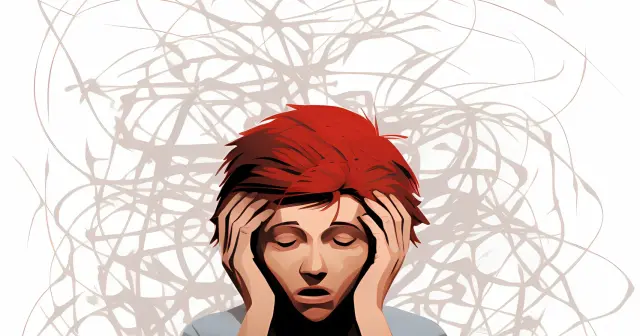
Imagine a man who smiles in his meeting, answers calmly and shakes everyone's hand warmly, then returns home to find himself tense for no clear reason. A passing remark tightens his chest, and he goes to sleep weighed down without knowing why. If you asked him, "Are you angry?", he would answer honestly: no. He is not lying to you; he simply does not feel his anger. Here lies the most dangerous form of this emotion:
anger that goes unseen, silent anger that works in the shadows.
We are used to treating anger as an explosion: a raised voice, a flushed face, sharp words. But what we see on the surface is only the visible tip of a submerged mountain. The real base lies in the depths, accumulating silently and reshaping our thinking, our energy and our personality without our permission, and sometimes without our even knowing it is there.
Anger Is an Emotion, Not an Enemy (THE NATURE OF ANGER)
Before we can understand silent anger, we should be fair to anger itself. At its root, anger is an adaptive emotion, designed by nature to protect us. It is an internal alarm signal telling us that a boundary has been crossed, a need has gone unmet, or a value has been hurt. In essence, anger is not the problem. The problem begins when we handle it badly: either by unloading it on those around us and hurting them, or by suppressing it inside and hurting ourselves.
The paradox is that most people fear the first form, the explosion, while the second, silent suppression, is the slower to act and the deeper in its effect. An outburst releases the charge, even if in the wrong way, but suppression traps the charge in the body and mind, turning it from a passing emotion into a chronic state that spreads through the personality the way rust spreads through metal.
Why Don't We Feel Our Own Anger? (THE INVISIBLE FIRE)
It may seem strange that a person can be angry without feeling it. But the mind has defense mechanisms that hide an emotion when it sees it as a threat to our image of ourselves or to our relationships. Someone who grew up in an environment that regards anger as a flaw, a weakness or bad manners learns early to extinguish this feeling before it reaches their awareness. They do not suppress it through conscious will; they program themselves not to feel it at all.
So anger turns from an open feeling into a masked energy that disguises itself in other forms: general listlessness, chronic procrastination, biting sarcasm, constant criticism, emotional coldness, or even physical illness. The person does not say "I am angry"; they say "I am tired," "I can't stand this," "nothing is worth it." It is the language of anger once it has lost its name.
Anger we do not name does not disappear; it only chooses a longer route to hurt us.
Where Do Its Roots Hide? (THE ROOTS)
Silent anger is rarely born of the situation in which it appears; it is usually the fruit of an old accumulation. Among its main sources are: unmet psychological needs such as appreciation, respect and security; personal boundaries that have been crossed again and again without our daring to defend them; expectations that let us down, whose disappointment we turned into suppressed bitterness; and old wounds that were never healed and went on bleeding in silence.
What these sources have in common is that they were never spoken. Every time we swallow an objection, stay silent in the face of a small injustice, or placate others at the expense of our truth, we deposit a charge inside that no one keeps account of. As the days pass the reserve fills, and a trivial incident is enough to make it overflow, or silence itself becomes a permanent weight.
The Masks of Silent Anger (THE MASKS)
Because this anger refuses to appear under its own name, it borrows many masks that we deal with every day without realizing they are the disguised face of a single emotion. One is
the mask of indifference: the person says "I don't care" and "it makes no difference to me," when in truth they care a great deal but have withdrawn their interest to protect themselves from an expected disappointment. Another is
the mask of perfectionism and criticism: the meticulous person who is never satisfied pours out their anger as constant correction of those around them.
Another is
the mask of excessive politeness; some people are overly kind and eager to please because they dare not say "no," so a silent resentment builds up inside them and later appears as sudden withdrawal or veiled reproach. And another is
the mask of the body: recurring headaches, tension in the neck and shoulders, stomach or sleep disturbances. Those who suffer them look for an organic explanation, while the source is a suppressed emotion that found no outlet except the body. When you learn to read these masks, the journey of recognizing your true anger begins.
Every mask that anger wears has a price, paid by its owner in health, relationships and inner peace.
How Does Anger Distort Our Thinking? (IMPACT ON THINKING)
The most dangerous thing about silent anger is that it does not stay within the realm of feelings; it seeps into the room where decisions are made. When the emotional charge is high, the brain's threat centers become active (chiefly the amygdala), while activity in the prefrontal cortex, which is responsible for deliberation, analysis and wise decision-making, recedes. The result is that we think with a hijacked mind while believing we are thinking objectively.
Anger narrows the field of vision. The person sees things in black and white, tends to interpret others' intentions in the worst light, exaggerates the offense and underestimates the possibility of good faith. It also weakens working memory and concentration, so the mind is occupied with a hidden inner battle that consumes its cognitive energy, leaving little for creativity, learning and problem-solving.
How Does It Drain Our Energy and Vitality? (IMPACT ON ENERGY)
Suppressing anger is not free; it is continuous inner work that burns real fuel. The body stays in a state of silent alert (the fight-or-flight response), stress hormones such as cortisol and adrenaline rise, muscles tense, sleep is disturbed and digestion slows. Over time this chronic alertness turns into unexplained exhaustion, general listlessness and loss of motivation.
Many who complain of "burnt-out energy" or burnout may not actually be suffering from too much work so much as from muted anger draining them from within. The energy that should have gone into productivity and life is spent covertly on holding the charge back and keeping it from showing.
This is closely tied to
emotional intelligence and a person's ability to manage their emotions.
What tires us at times is not the burdens we carry, but the feelings we suppress.
How Does It Reshape Our Character? (IMPACT ON CHARACTER)
When silent anger lasts long, it stops being a passing state and becomes a trait of personality. Gradually its owner becomes defensive, expecting harm before it happens; or sarcastic, hiding bitterness behind humor; or withdrawn, building a wall between themselves and others for self-protection. Positive feelings dull alongside the suppression of negative ones, so it becomes hard for the heart to rejoice, to the extent that it has been prevented from being angry. This directly affects
self-confidence and self-esteem.
Even more serious is its effect on relationships. Muffled anger leaks out in tone of voice, in heavy silence, in repeated criticism, and those close to us feel a wall they do not understand. So silent anger isolates its owner from those they love, not with a resounding explosion but with a slow coldness that creeps into the relationship until it empties it of warmth.
Signs That Reveal Hidden Anger (SELF-AWARENESS)
Because this anger does not announce itself, the first step toward freedom from it is learning to read its indirect signals. Watch yourself when you find: constant physical tension for no clear reason, exaggerated reactions to small situations, repeated criticism and complaining, procrastination and listlessness toward things you used to love, or difficulty saying "no" followed by silent resentment. These are not flaws of character, but messages from an anger asking to be heard.
Healthy Anger: When It Becomes an Ally (HEALTHY ANGER)
The goal is not to get rid of anger, which is both impossible and undesirable. The goal is to turn it from a hidden enemy into a conscious ally. The difference between healthy and toxic anger lies not in its intensity but in our awareness of it and how we deal with it. Healthy anger is known to its owner, who knows its source and names it, and expresses it at the right time, to the right degree and without wounding, after which it passes and leaves behind a clarity with no residue.
Toxic anger, by contrast, is unknown and suppressed; it accumulates in the shadows until it erupts in the wrong place or turns into chronic bitterness. The first defends your boundaries and values and pushes you toward change; the second drains and isolates you. The skill we call for is neither suppressing anger nor releasing it without restraint, but
regulating it (Emotion Regulation): feeling it clearly, understanding its message, and choosing how to respond to it rather than letting it respond on our behalf.
From Suppression to Awareness (THE WAY FORWARD)
The remedy for silent anger is not more suppression, nor a counter-explosion, but awareness. The first step is to give it its name: to dare to say "I am angry" inside ourselves without shame, because naming the emotion alone eases its intensity and returns the reins to our reason. Then we ask it gently: what are you protecting me from? And which of my needs has gone unmet? Behind every anger is a genuine need waiting to be acknowledged.
After that we learn to channel the energy in a healthy way: through calm, direct expression; by setting the boundaries we have long neglected; through physical movement that releases the charge; and through writing that brings what is inside into the light. When the matter exceeds our individual ability, there is no shame in seeking specialized support; awareness of emotion is a skill that can be acquired and trained, not a gift we are born with or denied.
You will not master peace with others before you make peace with what boils inside you.
A Final Word
In my years of working with people, I have learned that those most hurt by their anger are not the loud, angry ones, but the quiet ones who have convinced themselves they are "fine." They carry in their chests a well-mannered fire that burns them without visible smoke. My message to you is simple: do not fear your anger, and do not be ashamed of it; learn to listen to it. The anger we understand becomes a guide to our needs, boundaries and values, while the anger we ignore remains a hidden master that rules us without our knowing. And awareness is always the first step toward freedom.
By Dr. Naser Alfuraih
REFERENCES
References
1. Goleman, D. (1995). Emotional Intelligence: Why It Can Matter More Than IQ. New York: Bantam Books.
2. Ekman, P. (2003). Emotions Revealed: Recognizing Faces and Feelings to Improve Communication. New York: Times Books.
3. LeDoux, J. (1996). The Emotional Brain: The Mysterious Underpinnings of Emotional Life. New York: Simon & Schuster.
4. Siegel, D. J. (2010). Mindsight: The New Science of Personal Transformation. New York: Bantam Books.
5. van der Kolk, B. (2014). The Body Keeps the Score: Brain, Mind, and Body in the Healing of Trauma. New York: Viking.
6. Sapolsky, R. M. (2004). Why Zebras Don't Get Ulcers (3rd ed.). New York: Henry Holt.
7. Gross, J. J. (2015). Emotion Regulation: Current Status and Future Prospects. Psychological Inquiry, 26(1), 1–26.
8. Rosenberg, M. B. (2003). Nonviolent Communication: A Language of Life. Encinitas, CA: PuddleDancer Press.
9. Pennebaker, J. W. (1997). Opening Up: The Healing Power of Expressing Emotions. New York: Guilford Press