By Dr. Naser Alfuraih
Fear is a deeply rooted human emotion, embedded in our biological and psychological makeup. It was not created in us in vain; at its core, it is an evolved survival mechanism designed to protect us from danger and prompt caution in the face of threat. Yet the great paradox is that this emotion, which exists to preserve our lives, can turn, when it leaves its natural context, into a hidden prison that confines our personalities, distorts our decisions and aborts our dreams before they are born.
This article explores fear from multiple angles: its impact on shaping personality and decision-making, how it takes hold of a person's imagination and thinking, the hidden limits it imposes, and then practical ways to face it and deal with it daily, drawing on the insights of leading therapists and specialized coaches.
1. The Impact of Fears on Personality and Decisions
Fear does not pass through a person in passing; it leaves its deep imprint on the structure of their personality and the way they make decisions. A personality that grows up under chronic fear, whether fear of failure, rejection or loss of control, tends to adopt defensive patterns that show up as excessive hesitation, a constant need for external reassurance, and difficulty taking calculated risks. At the level of decision-making, cognitive psychology studies have shown that fear activates the amygdala, which handles threat processing and overrides the rational thinking mechanisms centered in the prefrontal cortex. This explains why many decisions made under the weight of fear are hasty and defensive, favoring loss avoidance over seizing opportunity (LeDoux, 2015). "Fear is a poor counselor; it magnifies the danger and shrinks our ability to face it at the same time." — Aristotle, Nicomachean Ethics More dangerous still, repeated decisions built on fear become entrenched over time and turn into a fixed trait of personality. Someone who repeatedly avoids confrontation gradually builds an identity based on avoidance, until fear becomes not merely a passing feeling but a lens through which they see the whole world.2. Fear and How It Affects the Imagination of Thought
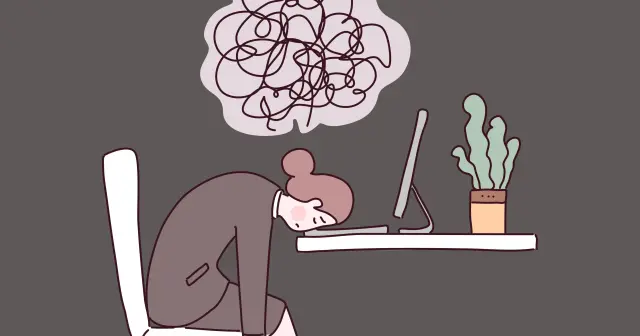
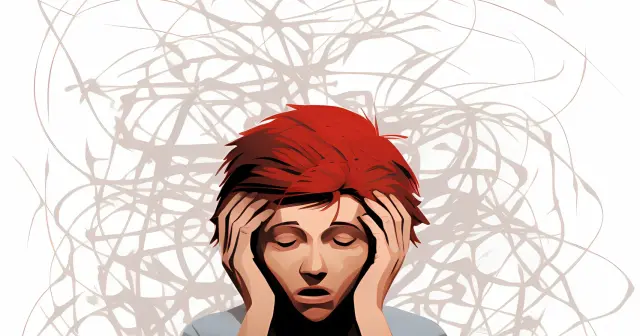
Fear has an enormous capacity to hijack the imagination and turn it from a tool of creativity into a factory of imagined disasters. The human mind is wired to anticipate the future, but when fear leads it, this anticipation turns into what therapists call "catastrophizing": exaggerated, dark scenarios that rarely come true, yet consume a person's energy and paralyze their will as if they were inevitable reality. Interestingly, the very imagination that produces fear is the same one that produces creativity and ambition. The difference is not in the tool but in the direction it is aimed. The neuroscientist Joseph LeDoux has noted that the brain does not distinguish well between an imagined threat and a real one; it responds to an imaginary danger with the same physiological response as to an actual one (LeDoux, 2015). Hence the vicious circle arises: the mind imagines a danger, the body responds with anxiety, the anxiety is interpreted as proof that the danger is real, and the fear multiplies. Breaking this circle begins with recognizing that most of what we fear is a product of our imagination, not of the facts of reality. "I have had a lot of troubles in my life, most of which never happened." — Mark Twain3. How Does Your Fear Restrict You?
Fear works as an invisible restraint whose chains cannot be seen, but whose effects are tangible in every detail of life. Its most dangerous feature is that it convinces its owner that the restraint is protection and that shrinking back is wisdom. The most prominent forms of this restriction are: Restricting the comfort zone: Fear pushes you to stay within a narrow, familiar circle and portrays every step outside it as a threat, so you miss opportunities for growth and expansion in the name of safety. Paralyzing initiative: Fear freezes the ability to act, so ambition turns into wishful thinking and an idea becomes a project postponed forever, on the pretext of waiting for the "right time" that never comes. Distorting self-esteem: Fear feeds a critical inner voice that magnifies flaws and belittles abilities, so self-esteem erodes and self-confidence gradually weakens. Damaging relationships: Fear of rejection or abandonment may lead to excessive clinging or protective withdrawal, and both weaken human relationships rather than protect them. The common denominator among all these forms is that fear strikes a bargain with a person: it grants a false sense of security in exchange for giving up a full life. It is a losing deal by every measure.4. Ways to Face Your Fears
Facing fear is not a heroic act of a single moment but a skill acquired through practice and method. Therapists and coaches have developed a set of scientifically supported ways to deal with fears and dismantle them:- Gradual Exposure: One of the strongest methods in cognitive behavioral therapy; it involves facing what is feared in small, escalating doses until the situation loses its ability to provoke panic, and the brain learns that the expected danger did not occur (Beck, 2011).
- Cognitive Restructuring: A central tool in Beck's school, it involves spotting the distorted thoughts that generate fear, testing their validity against the evidence, and then replacing them with more realistic and balanced thoughts.
- Writing down fears: Taking fear out of your head and putting it on paper strips it of its vagueness and shrinks it. What is written becomes open to examination and discussion, unlike the vague, which grows in the dark.
- Physiological regulation techniques: Such as slow, deep breathing and mindfulness, which calm the nervous system and break the body's panic response, restoring the mind's clarity (Kabat-Zinn, 1990).
- Redefining fear: Instead of seeing fear as an enemy, it is reframed as a signal that something important is at stake; fear often stands guard at the doors of the greatest opportunities for growth.
5. How to Deal with Your Daily Fears
Alongside systematic therapeutic methods, there are simple daily practices that accumulate a deep effect on a person's relationship with their fears. These practices do not require extraordinary effort, but consistency and commitment:- Start your day with an awareness question: Ask yourself in the morning: "What am I avoiding today because of fear?" Merely naming the fear strips it of half its power.
- Take one small action daily: Step into the fear zone with a small step each day: a postponed phone call, an opinion you express, a boundary you set. Courage is a muscle that grows stronger with repetition.
- Separate fact from expectation: When anxiety attacks you, ask: Is this a present reality or a scenario my imagination is creating? You will usually find it is the latter.
- Take care of your body: Enough sleep, movement and balanced nutrition lower baseline anxiety; an exhausted body is fertile soil for fears.
- Ask for support: Do not face your fears in isolation; sharing fear with a trusted person or a specialist lightens its weight and opens new angles of vision.