By Dr. Naser Alfuraih
There is a kind of
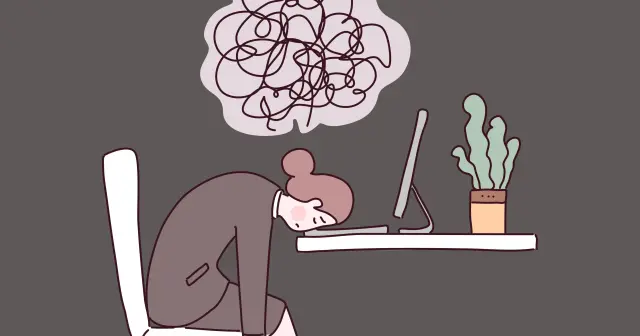
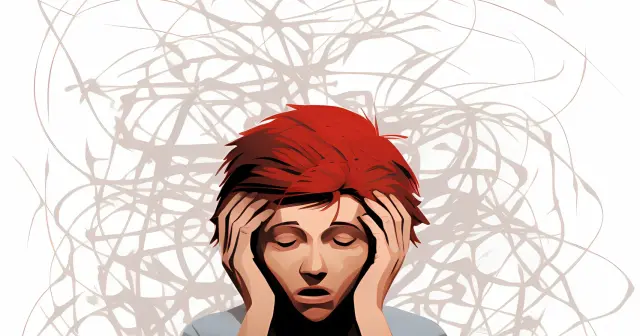
anger that a person does not direct at anyone outside, but pours entirely onto himself. There is no shouting in it and no quarrel, only a silent inner courtroom in which you are the accused, the judge and the executioner all at once. You make a small mistake and whip yourself over it for days. You hesitate over a decision and blame yourself for hesitating. You look in the mirror and see your flaws magnified and your strengths erased. This is
anger at oneself, the most hidden kind of anger and the most destructive, because it consumes a person from within without leaving any visible mark that would call for sympathy or help.
Most of us know how to be angry at others, but few realize that they carry inside them an opponent harsher than any outside one: their own self-critical voice. In this article we open this difficult file: how anger at oneself forms, how it creeps in to conspire against our actions and shake the way we see ourselves, how it turns us into hesitant people who avoid confrontation and lose faith in their own ability, and finally, how to recognize its presence in us so that we can begin the journey of reconciliation.
What Is Anger at Yourself?
Anger at oneself (Self-directed Anger) means turning the arrow of anger from the outside to the inside, so that you become the target of your own criticism, blame and punishment. Whereas anger at others finds an outlet in objection or conflict, anger at oneself closes in on its owner and circles in a closed loop: you are the one who made the mistake, you are the one who punishes, and you are the one who suffers.
Its roots usually go back to unbearable perfectionist standards we set for ourselves, or to an inner critic (Inner Critic) that we borrowed in childhood from an outside critic and that later became our own voice, or to a chronic sense of guilt that makes us see every shortcoming as proof of something lacking in us. The problem is not that we hold ourselves to account, since accountability is healthy, but that we do so without mercy, and confuse the mistake we made with our worth as human beings.
The reproach we direct at ourselves, if one of us directed it at a friend, would be considered unbearable cruelty.
How Does Anger Conspire Against Your Actions?
The most dangerous thing about anger at oneself is that it does not remain a mere feeling. It becomes a hidden hand steering your behavior against your own interest. A person who is angry at himself tends, without realizing it, toward self-sabotage: he postpones the task he fears he will fail at, then blames himself for the delay; he avoids an opportunity he deserves because deep down he feels he does not merit it; and he downplays his achievements so he will not be disappointed if someone praises him.
It is a silent conspiracy that anger forms with your fear. It persuades you that shrinking back is safer than trying, that silence is safer than speaking, and that staying where you are is kinder than risking the pursuit. And so you find yourself acting against what you truly want, then punishing yourself for that action, so the charge grows and the cycle begins again.
How Does Anger Shake the Way You See Yourself?
As self-blame repeats, your image of yourself erodes little by little. Instead of seeing yourself as a human being who makes mistakes and gets things right, you begin to see yourself through the lens of your mistakes alone. Passing errors turn in your mind into fixed verdicts: from "I made a mistake in this situation" to "I am a failure," and from "I was late this time" to "I can't be relied on." This harsh generalization is what turns passing anger into a wound in self-esteem (Self-esteem).
And when your view of yourself is shaken, everything built on it is shaken too: your decisions, your relationships and your ambition. You are no longer building your life on your real circumstances but on your distorted image of yourself. The harsher the image, the narrower your life becomes, because you treat yourself as less than you deserve.
Anger Is an Expression of Your Discomfort
Behind anger at oneself there often lies a message we have not read well: you are not comfortable. There is a conflict between what you are living and what you want, between your values and your reality, between your ambition and what you allow yourself. Anger here is not an enemy but an inner indicator telling you that something is not going well. Yet instead of listening to the message, you punish its bearer, that is, yourself.
This misunderstanding is what perpetuates the suffering. Instead of asking "What is really bothering me? Which of my needs has gone unmet?", you settle for judging yourself as deficient or negligent. When you learn to see your anger at yourself as a sign of discomfort that deserves understanding rather than punishment, the emotion begins to turn from a jailer into a guide.
Your anger at yourself is not a verdict on you, but a question you have not yet listened to.
From Hesitation to Avoiding Confrontation
When you are angry at yourself, you lose confidence in the soundness of your opinion. How can you defend your point of view before others when you have not yet made peace with yourself? That is why someone with inner anger hesitates to express his views, swallows his words at the last moment, and postpones his decision for fear of adding a new mistake to a record he believes is already full of them. Over time, hesitation becomes a trait of his personality rather than a passing stance.
From hesitation to avoiding confrontation is only one step. Confrontation requires that you trust you deserve to be heard, and that you have the right to object, to ask and to refuse. But someone who constantly punishes himself feels he has no such right, so he prefers withdrawal to clash, silence to objection, and politeness to candor. It looks like kindness and gentleness, but in truth it is an escape from a confrontation he fears he will lose in advance.
Inner Dialogue and a Negative View of Reality
Anger at oneself is not a feeling that stays quiet. It ignites an inner dialogue that never stops and tints all of reality a dark shade. The mind begins filtering experiences so that it sees only what confirms the bad assumption: "Nothing is going the way it should," "Things are always against me," "No matter what I do, it will never be enough." This is not a neutral reading of reality but a negativity bias (Negativity Bias) magnified by anger, so that a person becomes a prisoner of a pessimistic inner narrative that he takes for the truth.
The danger is that this dialogue feeds itself: the more you see reality as black, the angrier you become at yourself for being unable to change it, and the angrier you become, the darker your vision grows. It is a vicious circle that persuades you the problem lies in the whole world, when, to a large extent, it lies in the lens through which you look at it.
When You Lose Faith in Your Ability
One of the deepest effects of anger at oneself is that it undermines your sense of efficacy (Self-efficacy), that is, your confidence in your ability to accomplish what you intend to. Someone accustomed to blaming himself for every shortcoming starts his tasks already expecting to fail, so he performs them at half capacity or avoids them altogether so as not to face a new disappointment. In this way the expectation of failure becomes actual failure, and anger confirms the truth of its bleak prophecy.
It does not stop at tasks but extends to interaction with people. Someone who does not trust himself enters gatherings wary, monitors his words, and interprets any passing coolness as rejection of him and any mild criticism as confirmation of his inadequacy. So he withdraws socially to protect himself, missing relationships and opportunities he deserved, then blames himself for his loneliness and isolation, and the circle is complete.
The most dangerous thing anger at oneself does is persuade you that you are helpless, then make you live it until you believe it.
How Do You Recognize Anger Within You?
Because this anger does not announce itself, recognizing it begins with noticing its indirect traces in your feelings, behavior and inner language. Observe yourself gently and without condemnation. If you find many of these signs present in your life, know that inside you there is anger asking to be heard, not punished:
▪ Harsh inner talk: you speak to yourself in words you would not accept from anyone else.
▪ A chronic sense of guilt or falling short, even when you succeed and do well.
▪ Difficulty accepting praise, and a tendency to downplay your achievements.
▪ Frequent apologies for things that do not call for an apology.
▪ Procrastination on important tasks followed by self-blame.
▪ Constant comparison with others that always ends against you.
▪ Physical tension, unexplained fatigue and difficulty relaxing.
▪ A tendency to withdraw, avoid confrontation and hesitate over decisions.
The Path to Reconciling with Yourself
Freedom from anger at oneself does not come through more harshness toward it, which only worsens the ailment, but by learning self-compassion (Self-compassion). The first step is to separate the mistake from your worth: you made a mistake, yes, but your mistake is an event, not an identity, and your shortcoming is a situation, not an eternal verdict. Treat yourself as you would treat a dear friend who stumbled: with understanding, not whipping, and with encouragement, not scolding.
The second step is to listen to your critical voice and question it instead of believing it. Where did this voice come from? Is it really your own, or an echo of an old criticism? Is what it says true or exaggerated? When you stop treating your critical thoughts as facts, you regain the distance you need to see them for what they are. Then train yourself in a gentler inner language, and in acknowledging what you accomplish and not only where you go wrong.
Finally, remember that self-compassion is neither indulgence nor an escape from responsibility. It is the solid ground on which real change stands. A person does not flourish when a harsh master hates him, but when he finds someone who believes in him. And when the matter goes beyond what you can manage alone, there is no shame in seeking specialized support, for making peace with oneself is a skill that can be acquired and trained, not a fate we are driven toward.
You will not master compassion toward others until you give yourself the same measure of compassion.
You can watch
Dr. Naser Alfuraih's lecture on controlling anger and emotional reactions to explore this topic in greater depth.
A Final Word
The years have taught me that the harshest opponents a person faces may live inside him rather than outside. I have seen skilled, capable people who were captive to a voice that was never satisfied with them whatever they did, a voice that extinguished their energy, narrowed their lives and convinced them they were less than they are. My message to you: do not let your anger at yourself become a master who rules you. Make it a gateway through which you come to know your needs, your limits and your values. Be fair with yourself, merciful with your mistakes and encouraging toward your attempts. You are the person most deserving of your kindness, and the first who deserves your fairness is you.
References
1. Neff, K. (2011). Self-Compassion: The Proven Power of Being Kind to Yourself. New York: William Morrow.
2. Bandura, A. (1997). Self-Efficacy: The Exercise of Control. New York: W. H. Freeman.
3. Gilbert, P. (2009). The Compassionate Mind: A New Approach to Life's Challenges. London: Constable.
4. Beck, A. T. (1979). Cognitive Therapy and the Emotional Disorders. New York: Penguin.
5. Burns, D. D. (1980). Feeling Good: The New Mood Therapy. New York: William Morrow.
6. Brown, B. (2012). Daring Greatly: How the Courage to Be Vulnerable Transforms the Way We Live. New York: Gotham Books.
7. Harris, R. (2008). The Happiness Trap: How to Stop Struggling and Start Living. Boston: Trumpeter.
8. Goleman, D. (1995). Emotional Intelligence: Why It Can Matter More Than IQ. New York: Bantam Books.
9. Rosenberg, M. B. (2003). Nonviolent Communication: A Language of Life. Encinitas, CA: PuddleDancer Press.