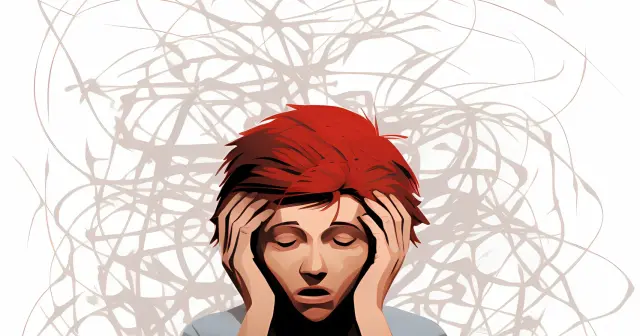

Strong feeling directs the rational faculty of the mind, and the feeling attached to a thought fixes the position you take, until what you do becomes a natural, continuing habit. The effort made to change springs from the idea and the force of the waves of feeling it carries; waves of thought extend and form a chain of waves until they become a series of thoughts that appear in quick succession.
- Strong inner feeling is what creates the waves of language, which turn into energy that drives the organic life of every body. Positive language helps the body maintain its vitality.
- The body keeps its vitality and goes on protecting itself from illness, just as the mind maintains its health and its ability to express itself and reach its ambitions and goals.
- Maintaining positive feeling constantly motivates a person to keep going. The person with positive feeling stays physically active, and the effort they put into life corresponds to the effort that comes from their feeling.
- Negative feeling reinforces the weakness of the mind through its language, reduces the body's performance and weakens the spirit's drive for life.
- Just as psychological effort grows from a rising force, as with emotional feeling, inner emotional effort influences the state of the mind's language from within. Linguistic intelligence grows, and a person becomes able to manage relationships with others and shape their form, to manage events, draw conclusions from them and preserve the gains of relationships.
- The inner effort you make from your emotions is reflected in your attitudes and the way you handle situations, and your social relationships are affected according to the intensity of the feeling with which you express yourself.
- The part of yourself that you express in your speech affects the shape of dialogue and the way understanding is reached in it, just as it affects how you receive speech when you are angry or tense. Your mind then interprets the feeling it receives from others as disturbing or hurtful.
- Negative feeling that is attuned to its own negativity pushes you away from others through a reverse attraction. That reverse attraction arises from within you, creating an inverted image and reducing your positive inner dialogue; negative feeling then produces a negative image, and a feeling takes shape inside the image that was created.
- Notice the effort you make from within the scene inside you. Notice how much negative emotional effort you expend, and the kind of verbal acts and words you use. Notice the state of your body as you use angry, nervous or tense language, and how it feels.
- External control, born of your awareness of your feeling, is reflected in the performance of your inner feeling. Keep observing the inner feeling you generate, how it influences the creation of events, and how you become certain of the correctness of your convictions about others.
- Changing the type of feeling is reflected automatically, with your inner mental attention directed to the area where events are created, and how you become certain of the correctness of your convictions about others.
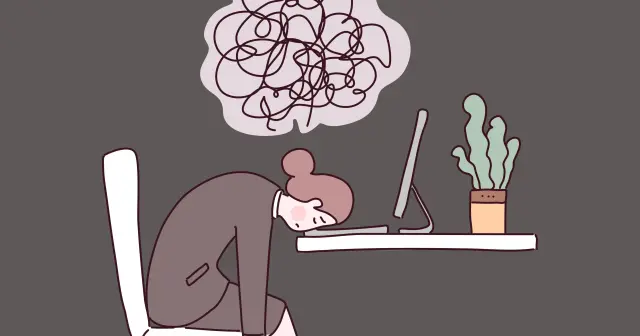
Changing the type of feeling is reflected automatically, when your inner mental attention is present in the area where events are created. This develops your control over how events are made, as the rational mind practices managing the events drawn from within the psyche. The more your attention rises on events as they are formed, the closer you come to your goals in relationships, and your relationship with others within events is determined by the feelings you bring into the events as pictured.
Change the form of your feelings and the form of your relationships changes. Your control over events begins with the strength of your feeling of contentment with your emotional feelings toward others. Turn events into reality with a feeling of acceptance toward the other party who shares life with you.
Replicated Daily Scenes
Your nervous mind carries the power of influence over all the events of your day. If nervous functioning is sad, for example, the sadness is reflected on all the feeling tied to the image, and the mind practices negative feeling from within the event.
That feeling is then reflected onto the rest of the images, and situations are interpreted as sad. The negative effort you make falls on others and conflict arises between you and them, so that effort turns into pessimism and constant disagreement, while the mental effort you make remains influenced by the old image.
The nervous-linguistic system creates a private language reflected from the old images, and the reflection continues to be imprinted on all scenes or some of them, even without prior experience.
To achieve change, you need to move outside the scene. To move outside the scene, you need to change the performance of your emotional feeling to a feeling opposite to the negative one.
By shifting to the positive, a meaning different from the image appears at once. The mind holds a picture of the scenes and interprets them differently from the habitual reflection, once it is released from its earlier attunement.
Mental focus turns in the direction opposite to habit. When exposed to inner pressure, a person makes a sudden change from their usual behavior, and the mind interprets events differently from before after making a representational effort different from the previous one. A scene usually carries more than one meaning; the mind settles on a single meaning, and the mind projects that one image onto all the images that follow. It does not step outside the framework of the habitual picturing. It preserves the formed picture and refuses to depart from it.
Unless it is subjected to inner pressure, it does not change its representational description. After being subjected to pressure, it keeps its new performance by releasing the pressure through changing its interpretation of events.
After that, the mind shifts focus away from the earlier meanings, withdraws attention from them and creates a new focus.
From that moment the mind begins practicing the new reflection, composes new values for the same image, preserves the new image and repeats it. The mind keeps reflecting and repeating the new image all the time, continuing to store the new data in place of the old.
After living with the event under the new data, and with the emotional feeling forming a new impression of acceptance, the mind reverses the old images and preserves the new ones.
All of this practices a suitable attraction for the new representational work, and the person lives with the results. The mind preserves new scenes and goes on drawing the same meaning in every coming image of the same scene, still drawing what it needs, and the reverse of it, into daily life.
Mental Dimensions:
Mental effort continues to draw power and to compose events from the dimensions of electromagnetic vital energy. It reinforces its request from within its nervous force, and develops a guiding language from within the language of the words it directs, as motivation for the situation and support for magnetic attraction.
The mind lives with the same sensory imprint of the chemical-biological activity inside the sensory-nervous centers, and neural connections form steadily, pulsing with a single pulse. The mind accepts keeping the same mental-nervous activity, and stays with the newly formed nervous activity in the network of nerves of the mind that pictures events.
Just as the mind reflects inner events onto outer life, it reflects the situation it practices in its detail, apart from the other parties to the situation, and draws the fitting responses. The mind prepares responses in an image and adapts them with the same earlier force. The response is lived out from its mental-nervous makeup before it is practiced outside, within the situations of events.
The earlier picturing is strongly reflected on the body before it is carried out in life, and from that moment attraction to events, and living with them, begins.
The body, which has lived with its nervous-motor tension, automatically carries out the feeling of tension with others in the same scene reflected in the environment of life, whether at work, at home with family, with friends, or at a time of shared participation in social events.
External execution is a complementary execution of the mental image whose details have been specified, and full execution is a procedure for completing the composite image. Behavior is carried out when the behavior reflected from the mind is carried out.
The mind proceeds to carry out the work by living with it, and maintains the degree of living with the reflected image, always deciding to live with it. The mind keeps reflecting the image onto other situations that differ from the earlier ones.
Copying images and repeating them is work the mind always preserves and decides to keep, because it is part of human nature.
By the same nature, the mind resists working against the repeated image, and cannot change the earlier reading unless it is subjected to inner nervous pressure.
To maintain its earlier performance, it carries out, with the force of confirmation, the interpretation of the coming image in the same way as before. In this way it always practices attraction in the same first manner.
What preserves the performance of the habitual image is that it does not step outside the frame of the image it inherited and formed at the start of its work. It therefore keeps drawing the same earlier form of meanings again and again. It supports its repeated work with its earlier conviction and continues the habitual work, and the work does not leave the repeated frame unless it is subjected to nervous pressure.